
Dental Implant Care Between Visits: A How-To Guide
Table of Contents
- Why Daily Dental Implant Care Matters Between Visits
- Step 1: Master Your Daily Oral Hygiene Routine
- Step 2: Choose the Best Tools for Cleaning Dental Implants
- Step 3: Build Habits That Protect Your Implant and Bone Health
- How to Prevent Peri-Implantitis Before It Starts
- Recognizing the Early Signs of Dental Implant Failure
- Troubleshooting Common Implant Care Challenges
- Your Implant Longevity Checklist
- Frequently Asked Questions
Last Updated: September 7, 2026
Why Daily Dental Implant Care Matters Between Visits
Your dental implant is designed to last for decades, but the tissues holding it in place need daily attention. Dental implant care is the routine you perform at home between professional checkups, and it directly determines whether your implant remains stable or develops complications.
Unlike a natural tooth, an implant has no ligament cushioning it, so plaque accumulates differently and inflammation can progress silently. Without consistent care, the gum tissue can become infected, leading to peri-implantitis that threatens the implant's long-term stability (the American Dental Association).
Step 1: Master Your Daily Oral Hygiene Routine
A consistent oral hygiene routine is the foundation of dental implant maintenance. Most implant failures stem from preventable plaque accumulation. Your daily goal is to remove biofilm from every surface of the crown, the abutment, and the gumline.
Brushing Techniques for Implants and Crowns
Use a soft-bristled toothbrush twice daily, holding it at a 45-degree angle where the crown meets the gum tissue (mouthhealthy.org). Brush in small circular motions for at least two minutes, paying extra attention to the junction where the crown emerges from the gums.
A common mistake is brushing too aggressively. Hard pressure can damage the gum tissue around your implant and create pockets where bacteria thrive. Let the bristles do the work with gentle, deliberate strokes.
Step 2: Choose the Best Tools for Cleaning Dental Implants
The best tools for cleaning dental implants go beyond a standard toothbrush because implants have contours a brush cannot reach. Interdental brushes are the gold standard for cleaning between your implant and adjacent teeth, while a water flosser can flush out debris and plaque from below the gumline.
Your toolkit should include three essentials: a soft-bristled toothbrush, interdental brushes in the correct size, and a non-abrasive toothpaste. A water flosser is a valuable addition, particularly for implant-supported bridges or multiple implants.
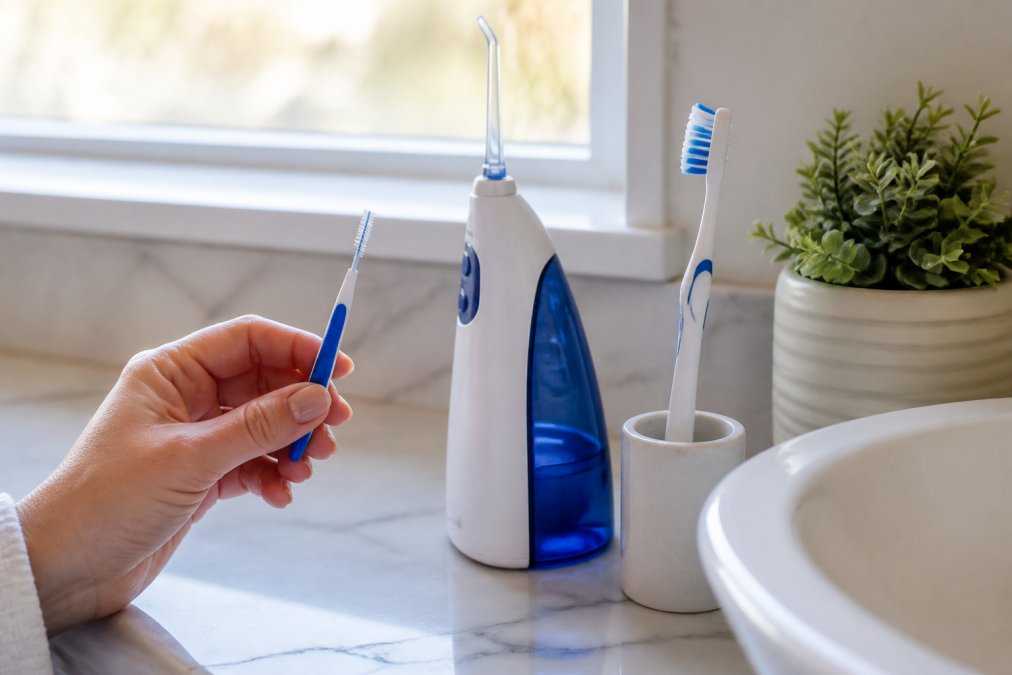
When selecting interdental brushes, size matters. A brush that is too small will not make proper contact with the implant surface, while one that is too large can damage your gums. Your dental provider can help you determine the right fit.
Step 3: Build Habits That Protect Your Implant and Bone Health
Daily habits extend far beyond brushing and flossing. Your implant's longevity depends on protecting the bone that anchors it, so avoid chewing on hard objects like ice, pens, or fingernails. But knowing what to do is only half the battle, the harder part is turning that knowledge into an automatic routine.
The Behavioral Psychology of Implant Care
Most patients leave the dental office with good intentions, but within weeks, old habits creep back in. This isn't a willpower problem; it's a habit-formation problem. New habits stick best when anchored to an existing routine:
- Anchor to brushing: Always clean between your implant and adjacent teeth immediately after brushing your front teeth, not at the end of your routine when you are rushed.
- Use visual cues: Keep your interdental brushes and water flosser visible on the counter, not hidden in a drawer. Out of sight genuinely means out of mind.
- Start small: If a full routine feels overwhelming, commit to cleaning just the implant area thoroughly for two weeks. Once that feels automatic, expand to the rest of your mouth.
- Track your streak: A simple calendar checkmark or a phone reminder app can reinforce consistency. Many patients find that a 30-day challenge helps cement the habit.
For older patients or those less comfortable with technology, the same principles apply without any apps. Place a sticky note on your bathroom mirror for the first month, or pair your implant care with a daily ritual like your morning coffee.
Systemic Health Factors That Directly Affect Implant Stability
Your implant does not exist in isolation; it lives in a body whose overall health directly influences the bone and gum tissue supporting it. Two systemic factors deserve special attention.
Diabetes management. If you have diabetes, your blood sugar control is one of the most powerful predictors of implant success. Uncontrolled diabetes impairs blood flow to the gums, slows healing, and increases infection risk because elevated glucose levels in saliva feed the bacteria that cause peri-implantitis. Keeping your HbA1c within your target range is a direct implant maintenance strategy.
Smoking cessation as a clinical priority. Tobacco use restricts blood flow to the gum tissue and bone, impairing healing and increasing the risk of peri-implantitis. Smokers have significantly higher rates of implant failure than non-smokers. Patients who stop smoking at least eight weeks before implant surgery and remain abstinent during healing have dramatically better outcomes. If you smoke, talk to your dental provider about cessation resources.
Dietary Choices That Support the Anchor Bone
Your diet also plays a role in bone health. Foods rich in calcium and vitamin D support the jawbone that holds your implant in place. A diet high in refined sugars promotes systemic inflammation, which can exacerbate gum inflammation. Conversely, a diet rich in omega-3 fatty acids, antioxidants, and adequate protein supports tissue repair and bone metabolism.
Staying hydrated is another underappreciated factor. Dry mouth reduces the natural cleansing action of saliva and increases plaque accumulation. If you take medications that cause dry mouth, sip water throughout the day and consider sugar-free lozenges to stimulate saliva flow.
Building Your Personal Habit Plan
Rather than trying to change everything at once, pick one habit from this section to focus on this week. Whether it is anchoring your interdental cleaning to a specific moment, scheduling a smoking cessation consultation, or adding a calcium-rich snack, small consistent changes compound over time.
How to Prevent Peri-Implantitis Before It Starts
Peri-implantitis is an inflammatory condition affecting the gum tissue and bone around a dental implant, and it is the leading cause of late implant failure. Preventing it requires a proactive approach to daily care and professional maintenance.
The most effective prevention strategy is consistent plaque removal at the gumline combined with regular professional cleanings. Plaque that sits on the implant surface hardens into tartar, which you cannot remove at home. Once tartar forms, it creates a rough surface that attracts more bacteria.
Schedule professional maintenance visits at least every six months, or more frequently if your dental provider recommends it. During these visits, your hygienist uses specialized instruments to clean the implant surface without scratching it, and your provider checks for early signs of problems.
| Prevention Habit | How Often | What It Protects |
|---|---|---|
| Brush with soft-bristled brush | Twice daily | Crown surface and gumline |
| Interdental brushing | Once daily | Spaces between implant and teeth |
| Water flosser use | Once daily | Below the gumline and bridges |
| Professional cleaning | Every 6 months | Implant surface and periodontal health |
| Self-check for symptoms | Weekly | Early detection of complications |
Recognizing the Early Signs of Dental Implant Failure
Knowing the signs of dental implant failure helps you catch problems early, when they are still treatable. Bleeding when you brush, persistent redness or swelling around the implant, and tenderness are all warning signs.
Other red flags include a change in how the implant feels when you bite, visible gum recession around the crown, or a loose implant. Pain that does not subside, or an unpleasant taste from the implant area, may indicate an infection.
Troubleshooting Common Implant Care Challenges
Even with good intentions, patients run into specific challenges with implant care. Here are the most common ones and how to address them.
Sensitive Gums After Brushing
If your gums feel tender after cleaning, you may be brushing too hard or using a brush that is too stiff. Switch to a soft-bristled brush and focus on gentle circular motions. If tenderness persists for more than a few days, check whether your interdental brush is the right size.
Difficulty Reaching the Back of the Mouth
Implants at the back of your jaw can be awkward to clean. A water flosser with an angled tip or a single-tufted brush can help you reach these areas effectively. If you have an implant-supported bridge, a floss threader or superfloss can help you clean underneath the pontic.
Persistent Bad Breath Around the Implant
This often signals that food debris is trapped below the gumline or around the abutment. Increase your use of interdental brushes and consider an antimicrobial mouth rinse. If the problem persists for more than a week despite diligent cleaning, schedule a professional cleaning.
Choosing Between a Water Flosser and Interdental Brushes
A common point of confusion is whether a water flosser can replace interdental brushes. The answer is no, they serve different purposes. Interdental brushes provide mechanical friction, the most effective way to disrupt the sticky biofilm on implant surfaces. A water flosser uses a pulsating stream to flush out loose debris and bacteria.
For most patients, the ideal approach is to use interdental brushes as the primary cleaning tool and a water flosser as a supplementary rinse. However, if you have dexterity challenges such as arthritis, a water flosser may be your most effective option.
The Red Flag Checklist: When to Call Your Dentist Immediately
Not every symptom requires an urgent call, but some do. Use this framework:
Call your dentist within 24 hours if you notice any of these:
- A loose implant or a crown that moves when you press on it
- Pain that does not subside with over-the-counter relief within two days
- Visible gum recession that exposes the metal abutment or threads
- An unpleasant taste or odor coming from the implant area that persists after cleaning
- Bleeding that continues beyond a few minutes after brushing
Monitor at home and mention at your next scheduled visit if you notice:
- Mild sensitivity that appears only when eating hot or cold foods
- Slight redness that resolves within a day of improved cleaning
- Occasional bleeding when you floss aggressively (this often means you need gentler technique)
What to Do When You Cannot Resolve the Issue at Home
If you have tried the troubleshooting steps above and the problem persists for more than a week, schedule a professional evaluation. Bring a list of what you have tried and when the symptoms started. Some problems, like early peri-implantitis, may have no obvious symptoms, which is why regular professional maintenance visits are non-negotiable.
Your Implant Longevity Checklist
Use this checklist to stay on track with your dental implant care between visits. Consistent daily habits, combined with professional oversight, give your implant the best chance of lasting for decades.
- Brush twice daily with a soft-bristled toothbrush at a 45-degree angle
- Clean between teeth with appropriately sized interdental brushes once daily
- Use a water flosser to flush debris from below the gumline
- Avoid hard objects, sticky foods, and abrasive toothpaste
- Maintain a balanced diet rich in calcium and vitamin D
- Schedule professional cleanings every six months
- Update your medical history at every visit, including new medications
- Check your gums weekly for bleeding, redness, or swelling
- Report any changes in how your implant feels when biting
Following this routine protects your investment and your oral health. The time you spend on daily care is minimal compared with the cost and discomfort of treating complications. According to guidance from the American Dental Association on implant maintenance, consistent home care combined with regular professional visits is the most reliable path to implant longevity.
Your implant represents a significant investment in your health and confidence. Protecting it requires a partnership between you and your dental team. At Midwest Center for Dentistry and Implants, we provide the education and support you need to stay healthy between visits.
Caring for your dental implant between visits comes down to consistent habits and the right guidance. The routine we have outlined here is straightforward, but it requires commitment every single day. If you have questions about your implant care or are due for a professional cleaning, the team at Midwest Center for Dentistry and Implants is ready to help. Led by Dr. Patel, we combine personalized attention with advanced technology to support your long-term oral health. Call us at (630) 766-0115 to schedule your next visit.
Frequently Asked Questions
What is the number one reason dental implants fail?
The most common cause of dental implant failure is peri-implantitis, a bacterial infection that inflames the gum tissue and destroys the bone supporting the implant. This condition develops when plaque accumulates around the implant because of inconsistent daily cleaning. Unlike natural teeth, implants have no ligament to fight off bacteria, so a strict oral hygiene routine is critical. Regular professional cleanings and daily interdental care are your primary defenses against this infection.
What are the best tools for cleaning dental implants?
The best tools for cleaning dental implants include a soft-bristled toothbrush, low-abrasive toothpaste, and interdental brushes sized to fit the gap around your implant. Water flossers are also highly effective for flushing out debris and plaque from hard-to-reach areas. Avoid metal instruments, stiff brushes, and abrasive pastes that can scratch the implant surface. Your dental provider can recommend specific sizes and techniques tailored to your restoration during your next checkup.
How often should I see my dentist for implant maintenance?
You should schedule a professional maintenance visit every six months, though your dentist may recommend more frequent visits if you have a history of gum disease or other risk factors. These appointments go beyond a standard cleaning. Your dental professional will check the stability of your implant, measure pocket depths around it, and remove tartar that brushing at home cannot reach. These visits are essential for catching early signs of complications before they become serious.
What are the early signs of dental implant infection?
Early signs of a dental implant infection include redness, swelling, or tenderness in the gum tissue around the implant, bleeding when you brush, and persistent bad breath. You might also notice a bad taste in your mouth or discomfort when chewing. If you experience any of these symptoms, contact your dental provider promptly. Early intervention can stop the infection from spreading to the bone and compromising your implant's long-term success.