Is Sedation Dentistry Worth It for Simple Fillings?
Table of Contents
- Understanding Sedation Dentistry for Simple Fillings
- Types of Dental Sedation Explained
- Cost of Sedation Dentistry for Fillings
- Dental Anxiety Management Techniques Beyond Sedation
- Is Sedation Worth It? Weighing the Pros and Cons
- Recovery and Post-Sedation Considerations
- Frequently Asked Questions
Last Updated: September 18, 2026
Understanding Sedation Dentistry for Simple Fillings
Sedation dentistry is the use of medication to help patients relax during dental procedures without putting them to sleep. For simple fillings, determining whether is sedation dentistry worth it for simple fillings involves weighing anxiety relief against recovery time, cost, and whether local anesthesia alone might suffice. At Midwest Center for Dentistry and Implants, the team works with patients to determine which approach matches their comfort level and clinical needs.
The real question is whether anxiety relief justifies the added expense and recovery time for a straightforward filling. Some patients have genuine dental phobia that prevents treatment; others have mild discomfort manageable with local anesthesia and a calm environment. Understanding the difference determines whether sedation makes sense for your situation.
Local anesthesia blocks pain signals without affecting consciousness. Sedation addresses the psychological component, fear, anticipation, and anxiety, that can make a patient's heart race before treatment begins. For patients with significant dental anxiety, this distinction matters.
Types of Dental Sedation Explained
Dental sedation exists on a spectrum, with type depending on anxiety severity, procedure complexity, and medical history.
Nitrous Oxide: The Mildest Option
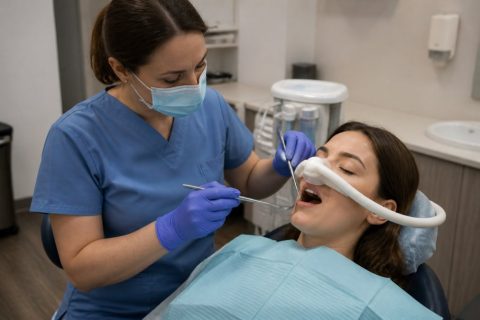
Nitrous oxide (laughing gas) is the gentlest option. The patient inhales a nitrous oxide and oxygen mixture through a nose mask. Effects begin within minutes and wear off almost immediately once removed.
Patients remain conscious and can communicate. The dentist adjusts concentration in real time. Recovery is immediate, patients can drive home and return to normal activities right away.
The trade-off is limited effectiveness. Nitrous oxide works best for mild to moderate anxiety; severe phobia or strong gag reflexes often require deeper sedation.
Oral Conscious Sedation: Moderate Relaxation
Oral conscious sedation involves taking a sedative by mouth before the appointment. The patient remains awake but deeply relaxed, often with little memory of the procedure, an amnesia effect that appeals to anxious patients.
The medication takes 30-45 minutes to reach full effect. Vital signs are monitored throughout. The sedative wears off gradually over several hours, requiring a responsible adult to drive the patient home.
Oral conscious sedation suits patients with moderate to significant anxiety who need more relaxation than nitrous oxide provides. The amnesia component is valuable for patients with traumatic dental memories.
IV Sedation: Deep Sedation for Severe Anxiety
IV sedation delivers medication directly into the bloodstream, allowing precise depth control. The patient enters a deeply relaxed state with little memory of the procedure. Vital signs are continuously monitored.
IV sedation is reserved for severe dental phobia, significant gag reflexes, or extensive dental work. Recovery takes longer, requiring transportation and several hours of downtime.
For simple fillings, IV sedation is often overkill unless anxiety is genuinely severe.
Cost of Sedation Dentistry for Fillings
Cost varies by sedation type. Understanding direct and indirect expenses is essential to determine whether sedation justifies its price.
Direct Sedation Costs
Nitrous oxide adds $50-$100 to the base filling cost ($150-$300), a 20-40% increase that many patients find manageable.
Oral conscious sedation adds $200-$400 (60-130% increase). Most cost reflects the dentist's time for assessment, monitoring, and observation.
IV sedation adds $400-$800 or more, reflecting specialized equipment, continuous monitoring, and expertise. For a simple filling, this cost can exceed the filling itself.
Indirect Costs Often Overlooked
Patients often underestimate true sedation cost by ignoring recovery time, which extends far beyond the 20-30 minute filling procedure.
Nitrous oxide requires no recovery time, a significant advantage for working professionals.
Oral conscious sedation requires 3-4 hours of recovery with no driving, machinery operation, or important decisions. A 2 p.m. appointment means no safe driving until 5-6 p.m. For hourly workers, a 4-hour recovery window costs $40-$200 in lost income.
IV sedation extends recovery to 4-6 hours or longer, often requiring a full day off work. For a patient earning $25/hour, this represents $200 in lost wages. Adding transportation costs, true cost can reach $600-$1,000.
Insurance Coverage and Out-of-Pocket Reality
Insurance coverage varies dramatically. Some plans cover sedation for documented dental anxiety disorder; others cover only extensive procedures or complex cases. Many do not cover sedation for routine fillings.
Before scheduling, contact your insurance provider and ask: "Does my plan cover sedation for simple fillings, and what is my out-of-pocket responsibility?" Request this in writing to avoid surprise bills.
Patients without insurance or facing high costs must weigh sedation against clinical reality: local anesthesia alone produces an identical outcome. The only difference is psychological experience during the procedure.
The Cost-Benefit Decision Framework for Simple Fillings
For a straightforward filling, the question of whether is sedation dentistry worth it for simple fillings requires asking: (1) Is anxiety severe enough to prevent treatment without sedation? (2) Can I afford total cost including recovery time? (3) Do I have time for recovery, or must I return to work the same day? (4) Are there medical reasons sedation is necessary (severe gag reflex, anxiety-triggered cardiac issues)?
For typical patients with mild to moderate anxiety, local anesthesia with supportive techniques (breathing exercises, distraction, reassurance) provides sufficient comfort at zero cost and zero recovery time. Sedation becomes "worth it" only when anxiety is severe enough to justify the financial and time investment.
Dental Anxiety Management Techniques Beyond Sedation
Not every anxious patient needs sedation. Many respond well to non-pharmacological approaches that reduce anxiety without medication or recovery time.
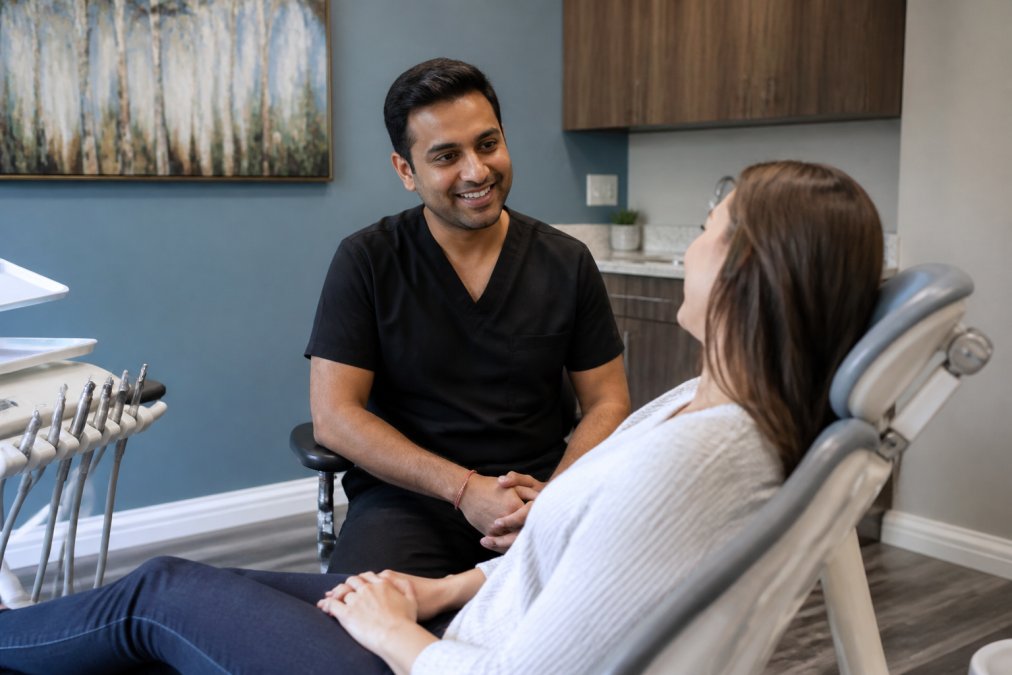
Deep breathing techniques lower heart rate and activate the parasympathetic nervous system. Box breathing (inhale 4 counts, hold 4, exhale 4) costs nothing and works for many with mild to moderate anxiety.
Distraction redirects attention from dental sounds and sensations. Headphones with music or podcasts, or ceiling-mounted screens, can significantly improve comfort.
Progressive muscle relaxation involves tensing and releasing muscle groups to reduce physical tension. This technique pairs well with breathing exercises.
Cognitive reframing challenges anxious thoughts. Instead of "This is going to hurt," practice "The numbing medication prevents pain. I'll feel pressure but not pain." Repeating these statements reduces anticipatory anxiety.
Arriving early reduces rumination time. Meeting the dental team, seeing the treatment room, and understanding the procedure sequence reduces fear of the unknown.
For mild anxiety, these techniques often prove sufficient with no cost, recovery time, or medical risk.
Is Sedation Worth It? Weighing the Pros and Cons
The decision depends on anxiety severity, recovery time availability, cost tolerance, and clinical necessity.
When Sedation Makes Sense for Simple Fillings
Sedation becomes worthwhile when anxiety prevents necessary treatment. A patient who avoids the dentist for years due to phobia may benefit enormously, as psychological relief justifies cost and recovery time.
When Local Anesthesia Alone May Be Sufficient
Many patients with mild anxiety tolerate simple fillings well with local anesthesia and supportive techniques. Numbing medication prevents pain, and a calm dentist makes a measurable difference.
Recovery and Post-Sedation Considerations
Recovery varies by sedation type. Understanding the practical impact on work, driving, and function is critical to the "worth it" decision.
Nitrous Oxide Recovery: Immediate Return to Function
Nitrous oxide wears off within 5-10 minutes of mask removal. Patients regain full alertness and can drive, work, eat, or resume any activity without restriction.
Oral Conscious Sedation Recovery: 3-4 Hours of Impairment
Oral conscious sedation requires 3-4 hours for full metabolism. Driving ability is compromised. The sedative affects reaction time, coordination, and judgment. Most dentists recommend no driving for 3-4 hours after the appointment. A 2 p.m. appointment means no safe driving until 5-6 p.m. This is a legal and safety requirement.
IV Sedation Recovery: 4-6+ Hours and Potential Grogginess
IV sedation produces the deepest sedation and longest recovery. Most patients require 4-6 hours to feel fully alert; some experience residual grogginess into the evening.
Post-Sedation Nausea and Side Effects
Post-operative nausea occurs in 10-15% of oral conscious sedation patients and 15-20% of IV sedation patients. Nausea is usually mild and resolves within 1-2 hours. Risk factors include empty stomach, anxiety, certain medications, and individual sensitivity to sedatives.
Practical Productivity Impact: The Real Decision Factor
When deciding whether sedation is "worth it," consider: (1) Self-employed or hourly: Lost recovery time costs $100-$200. Add to sedation fee for total cost. (2) Demanding afternoon schedule: Impairment makes same-day work continuation impractical; only nitrous oxide allows this. (3) Childcare responsibilities: You'll need someone to supervise, adding logistical complexity and cost. (4) Flexible schedule: Afternoon off makes recovery less burdensome.
Post-Operative Care Instructions
After your appointment: (1) Do not eat or drink for 30 minutes (numbing medication may still be active). (2) Avoid hot foods and beverages for several hours. (3) Do not smoke for at least 2 hours. (4) Rest and avoid strenuous activity for the remainder of the day, particularly after oral or IV sedation. (5) Stay hydrated and eat light, soft foods if nauseous. (6) Take over-the-counter pain reliever if mild discomfort occurs.
Frequently Asked Questions
Do you need sedation for a simple dental filling?
Not necessarily. A simple filling can be completed with local anesthesia alone, which numbs only the tooth being treated. Sedation dentistry is optional and depends on your anxiety level, gag reflex sensitivity, and comfort with dental procedures. Many patients without dental anxiety handle fillings without sedation. Your dentist can discuss whether sedation makes sense for your specific situation during a consultation.
What are the potential downsides of oral sedation for minor procedures?
Oral sedation requires recovery time as the medication wears off, typically 2-4 hours. You'll need someone to drive you home and cannot operate machinery or make important decisions during this period. Some patients experience grogginess, mild nausea, or headaches. It's also more expensive than nitrous oxide. For a simple filling, this recovery burden may outweigh the anxiety relief, especially if local anesthesia alone would suffice.
What is the safest form of sedation for dental fillings?
Nitrous oxide is generally considered the safest option for routine fillings because it has a rapid onset and quick recovery with minimal side effects. Vital signs remain stable, and patients stay conscious and responsive. Oral conscious sedation is safe when administered by trained professionals but carries slightly more risk due to deeper relaxation. IV sedation is also safe with proper monitoring but is typically reserved for complex or extensive procedures rather than simple fillings.
Is sedation dentistry worth the extra cost for routine care?
That depends on your anxiety level and the complexity of the procedure. For mild dental anxiety, dental anxiety management techniques or nitrous oxide may be sufficient and more cost-effective. For severe dental phobia that prevents you from seeking care, sedation's cost is justified because it enables treatment that otherwise wouldn't happen. For simple fillings without significant anxiety, local anesthesia alone is typically the most practical and economical choice.