
Alternatives to Porcelain Veneers for Gaps: 2026 Guide
Table of Contents
- Why Look for Alternatives to Porcelain Veneers for Gaps?
- Dental Bonding for Gaps: A Minimally Invasive Option
- Clear Aligners for Teeth Gaps: Addressing the Root Cause
- Bioclear: An Advanced Composite Resin Technique
- Dental Crowns: A Restorative Solution for Damaged Teeth
- Cost of Dental Bonding vs Veneers and Other Options
- Comparing Durability and Reversibility of Gap Treatments
- Frequently Asked Questions
Last Updated: September 16, 2026
Why Look for Alternatives to Porcelain Veneers for Gaps?
Porcelain veneers are not the only way to close a gap between teeth, and for many patients they are not the best one. Alternatives to porcelain veneers for gaps include dental bonding, clear aligners, Bioclear composite restorations, and dental crowns, each with a different trade-off between cost, durability, and how much natural tooth structure gets removed. At Midwest Center for Dentistry and Implants, we walk patients through those trade-offs.
Here is the part most guides skip: a gap is a symptom, not a diagnosis. A diastema (the clinical term for a space between teeth) can come from tooth size, jaw spacing, a tongue-thrust habit, or missing teeth. The treatment that fits depends entirely on which one caused yours.
A common mistake is choosing a treatment based on photos alone. If the gap exists because teeth are misaligned, bonding or veneers mask the symptom while the underlying position stays the same.
The four alternatives below cover the realistic range of options, from a single-visit bonding appointment to a full orthodontic correction.
Dental Bonding for Gaps: A Minimally Invasive Option
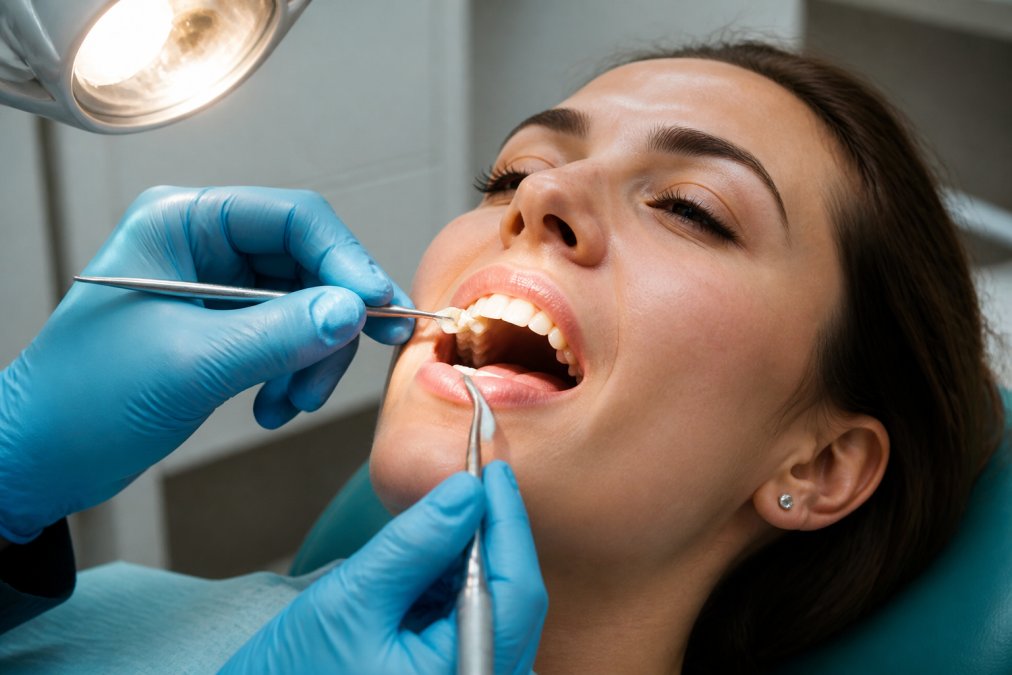
Dental bonding for gaps is the fastest and least invasive way to close a small space. A dentist applies color-matched composite resin directly to the tooth edge, sculpts it, and hardens it with a curing light, usually in one appointment and with little to no enamel removal.
How Long Does Dental Bonding Last?
Dental bonding typically lasts three to five years before it needs repair or replacement. Composite resin wears, stains, and can chip at the edges over time, and longevity depends heavily on your bite and daily habits.
Clear Aligners for Teeth Gaps: Addressing the Root Cause
Clear aligners for teeth gaps treat the cause rather than the appearance. A series of custom-fitted, removable trays gradually shifts teeth into position, closing the space by moving the teeth themselves instead of adding material to them.
Bioclear: An Advanced Composite Resin Technique
Bioclear is a minimally invasive technique that uses clear anatomical forms and heated composite resin to rebuild tooth structure. The clear matrix shapes the resin around the tooth, and warming it improves flow and adaptation, producing a monolithic restoration with fewer seams than standard bonding.
Dental Crowns: A Restorative Solution for Damaged Teeth
Dental crowns solve a different problem. A crown is a custom-fitted cap that covers the entire visible portion of a tooth, and it makes sense when a gap sits next to a tooth that is cracked, heavily decayed, or structurally weak.
Cost of Dental Bonding vs Veneers and Other Options
The cost of dental bonding vs veneers is a key difference between the two. Bonding sits at the lower end of cosmetic dentistry; porcelain veneers typically cost more because they involve a dental lab, multiple visits, and irreversible enamel removal.
| Treatment | Typical U.S. cost per tooth | Typical number of visits |
|---|---|---|
| Dental bonding | $300-$600 | 1 |
| Bioclear | $500-$1,200 | 1-2 |
| Porcelain veneers | $900-$2,500 | 2-3 |
| Porcelain or ceramic crown | $1,000-$2,500 | 2 |
| Clear aligners (full case, not per tooth) | $3,000-$8,000 | Ongoing, 6-24 months |
What Insurance Actually Covers
This is where most guides get vague, so here is the practical split. Dental insurance is built around medically necessary treatment, not cosmetic improvement. That distinction decides almost every claim.
- Usually covered (at least partially): crowns when a tooth is cracked, fractured, or has lost too much structure to hold a filling; bonding when it repairs decay or a fracture rather than closing a cosmetic gap.
- Usually not covered: porcelain veneers, cosmetic bonding to close a diastema, Bioclear for purely aesthetic gaps, and clear aligners when the only goal is closing a small space.
- Sometimes covered: clear aligners when the gap is part of a documented malocclusion (a bite problem), not just a cosmetic concern. Many plans require a pretreatment estimate and X-rays before they will approve orthodontic benefits.
Financing and Payment Options
- In-house payment plans, monthly installments arranged directly with the practice, often with no interest for shorter terms.
- Third-party patient financing, outside lenders that pay the practice up front and let you repay over 6 to 60 months. Approval is based on credit, and longer terms usually carry interest.
- Health savings and flexible spending accounts, HSA and FSA dollars can generally be used for dental treatment, including some cosmetic work, if your plan documents allow it. Check your plan’s rules before you schedule.
- Dental school clinics, supervised student treatment at a reduced fee. The trade-off is longer appointments and less scheduling flexibility.
Pricing for any of these treatments depends on the number of teeth involved, the technique, and your location, so exact figures come from a consultation and treatment plan rather than a general guide. The table above is a starting point for the conversation, not a substitute for it.
Comparing Durability and Reversibility of Gap Treatments
Reversibility is the factor patients ask about least and regret ignoring most. Bonding, Bioclear, and clear aligners can generally be undone or adjusted without permanent change to your teeth. Crowns and porcelain veneers cannot, because both require removing enamel that does not grow back.
| Treatment | Expected lifespan | How it typically fails | Reversible? |
|---|---|---|---|
| Dental bonding | 3-5 years | Chips at the edge, stains, wears at the bite | Yes, in most cases |
| Bioclear | 5-10 years | Slower staining and fracture than standard bonding, but still composite | Yes, in most cases |
| Clear aligners | Correction is permanent if retainers are worn | Teeth drift back without retention | Yes (treatment itself) |
| Porcelain veneers | 10-15 years | Debonding, fracture, or gum recession at the margin | No |
| Porcelain or ceramic crown | 10-15 years, sometimes longer | Fracture of the porcelain, decay at the margin, or root problems | No |
Why the Numbers Move
Lifespan is not a fixed property of the material, it is a function of your bite, your habits, and your maintenance.
- Bite force. Patients who grind or clench put far more load on the front teeth. Composite fails first because it is softer than porcelain; a night guard can add years to any restoration.
- Diet and staining. Coffee, tea, red wine, and tobacco stain composite faster than porcelain because composite is more porous. Bonding and Bioclear need polishing at checkups to stay color-matched.
- Oral hygiene at the margin. Crowns and veneers do not decay, but the tooth underneath them can. Decay at the margin is one of the most common reasons a crown has to be replaced.
- Retainer compliance. After aligner treatment, retainers are what hold the result. Skipping them is the single most common reason a closed gap reopens.
The Reversibility Question, Answered Directly
If you want the option to change course later, the ranking is clear:
- Clear aligners, no tooth structure removed. If you stop wearing retainers, the teeth drift, but the enamel is intact.
- Dental bonding and Bioclear, composite is added, not carved away. In most cases it can be removed or reshaped, though repeated bonding can eventually thin the enamel underneath.
- Porcelain veneers and crowns, irreversible. Enamel removed for the restoration does not grow back, so the tooth will always need some form of coverage afterward.
Frequently Asked Questions
What do dentists recommend instead of veneers for closing gaps?
Dentists often recommend dental bonding or clear aligners as primary alternatives to porcelain veneers for gaps. Bonding uses composite resin to close small spaces in a single visit, while clear aligners gradually shift teeth to eliminate gaps caused by misalignment. For larger gaps or compromised teeth, dental crowns or the Bioclear technique may be better options. The right choice depends on your gap size, tooth health, and budget.
How does dental bonding compare to porcelain veneers for gap closure?
Dental bonding is less invasive and typically costs less than porcelain veneers. It can be completed in one appointment without removing enamel. However, bonding material is more prone to staining and chipping, and its longevity can vary compared to veneers. Veneers offer superior stain resistance and a more uniform appearance, but require permanent enamel removal.
Can clear aligners fix gaps between teeth?
Yes, clear aligners can close gaps caused by misalignment or spacing issues. They work by gradually moving teeth into proper position using a series of custom trays. Aligners are removable and nearly invisible, but they require consistent wear for 20-22 hours daily. Treatment time varies based on gap size and complexity.
How long does dental bonding last on average?
Dental bonding's longevity varies with proper care. Longevity depends on your oral habits, the location of the bonding, and how well you maintain oral hygiene. Bonding on front teeth may chip more easily, while bonding on less visible teeth can last longer. Avoiding hard foods, nail biting, and staining substances can help extend its lifespan.
Is there a cheaper alternative to porcelain veneers for gaps?
Dental bonding is generally a cost-effective alternative to porcelain veneers for closing gaps. Clear aligners may also be cost-effective for gaps caused by misalignment, especially if multiple teeth are involved. However, pricing varies by provider and case complexity, so consult a dentist for an accurate estimate.