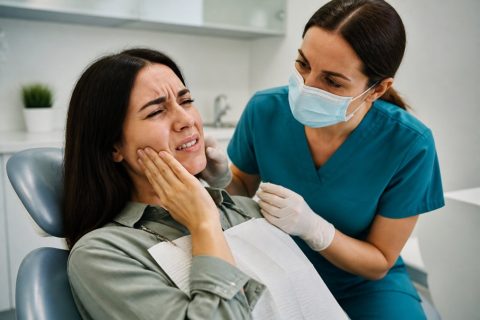
Emergency Dental Clinics in Chicago Accepting State Insurance
Table of Contents
- What Counts as a Dental Emergency and Where to Go
- Emergency Dental vs Emergency Room: Which One Do You Need?
- Medicaid Dental in Chicago: What State Insurance Covers
- How to Apply for Medical Card Dental Benefits
- How to Verify a Clinic Accepts Your State Insurance
- Finding Emergency Dental Clinics in Chicago Accepting State Insurance
- Paying for Emergency Dental Care Without Insurance
- Frequently Asked Questions
Last Updated: September 11, 2026
What Counts as a Dental Emergency and Where to Go
A dental emergency is any condition involving severe pain, bleeding, swelling, or trauma to a tooth or jaw that requires immediate professional attention. Knowing which symptoms demand urgent care helps you avoid unnecessary ER visits and get treated faster.
Symptoms That Need Immediate Treatment
Some dental problems resolve with rest and a saltwater rinse. Others get worse by the hour. Seek care the same day if you notice:
- Uncontrolled bleeding from the mouth
- Facial or jaw swelling that affects breathing or swallowing
- A knocked-out or badly fractured tooth
- Severe, throbbing toothache that wakes you at night
- A dental abscess with pus or a bad taste
Swelling that spreads toward the eye or neck is the one symptom you should never wait on, it can signal a spreading infection (the NHS).
After-Hours Triage: When to Wait and When to Act
Most dental offices close in the evening, so you need a way to sort urgent from non-urgent at home. A chipped tooth with no pain can usually wait until morning. A toothache that responds to over-the-counter pain relief can often wait a day. Bleeding that won't stop, difficulty breathing, or swelling around the eye cannot.
If you are unsure, call your dental provider's after-hours line. Many offices offer phone guidance so you know whether to come in or wait.
Emergency Dental vs Emergency Room: Which One Do You Need?
For a tooth problem, an emergency dental office is almost always the better choice. Emergency rooms can treat pain and infection, but most do not have a dentist on staff to perform the actual dental work. You may leave the ER with a prescription and a referral, then still need to find a dentist the next day.
| Situation | Best Setting | Why |
|---|---|---|
| Severe toothache, abscess | Emergency dental office | Dentist can drain infection and treat the tooth |
| Knocked-out tooth | Emergency dental office | Time-sensitive reimplantation |
| Facial swelling with breathing trouble | Emergency room | Airway risk needs medical stabilization |
| Jaw fracture | Emergency room | Requires imaging and surgical evaluation |
| Broken filling, no pain | Regular dental appointment | Not urgent, treat during office hours |
The American Dental Association guidance on dental emergencies recommends calling your dentist first for most dental problems before heading to a hospital.
Medicaid Dental in Chicago: What State Insurance Covers
Medicaid dental in Chicago covers a defined set of services, and knowing what's included prevents surprise bills. Coverage varies by state and by managed care plan, so the specifics depend on your plan documents.
Covered Services and Managed Care Plans
Most state Medicaid dental programs cover emergency exams, X-rays, extractions, and treatment for pain and infection. Preventive services like cleanings and exams are often covered for children and, depending on the plan, for adults.
In Illinois, the Department of Healthcare and Family Services (HFS) administers the medical assistance program, and many enrollees receive dental benefits through a managed care organization such as DentaQuest. Your plan determines your provider network and any limits on services.
How to Apply for Medical Card Dental Benefits
Applying for medical card dental benefits starts with a single application through your state's benefits portal. In Illinois, you apply through the Illinois Department of Healthcare and Family Services application portal, which determines eligibility for the medical card that carries your dental coverage.
Here is the general process:
- Complete the application online, by phone, or at a local office
- Provide proof of income, identity, and residency
- Wait for an eligibility determination
- Choose a managed care plan that includes dental benefits
- Receive your medical card and plan information
- Confirm which dental providers are in your plan’s network
If you already have a medical card but haven't used the dental benefit, call the member services number on the back of your card to confirm your dental coverage and request a dental provider directory.
How to Verify a Clinic Accepts Your State Insurance
Verifying coverage before your appointment saves you from a surprise bill, but the harder problem is confirming that your state insurance is actually active and tied to the plan you think you have. A clinic can be in-network for your plan and still turn you away if your eligibility lapsed or you were auto-assigned to a different managed care organization. Work through the steps below in order.
Step 1: Confirm Your Coverage Is Active
Start with the member services number on the back of your medical card. Ask three questions:
- Is my coverage active as of today’s date?
- Which managed care plan am I enrolled in for dental benefits?
- What is my member ID for that dental plan?
If you do not have a card, most state benefits portals let you look up your case status online using your name, date of birth, and Social Security number or case number. Coverage can lapse for procedural reasons, a missed renewal form, an address change, a redetermination notice, even when you did nothing wrong. Confirming active status first prevents you from calling five clinics that all tell you the same thing.
Step 2: Identify Your Dental Plan, Not Just Your Health Plan
A common pattern is that medical and dental benefits are carved out to different managed care organizations. Your health plan may cover doctor visits while a separate dental plan handles cleanings, exams, and emergency treatment. If you switched health plans during open enrollment, your dental network may have changed too, or may not have.
Ask member services to name the dental plan specifically. Write it down. This is the name you give the front desk when you call.
Step 3: Check the Plan’s Provider Directory
Every managed care organization publishes an online provider directory. Search by ZIP code and filter for "emergency" or "urgent care" if the tool allows it. Directories are often out of date, so treat the listing as a starting point, not proof, a provider may have stopped accepting new patients or left the network since the last refresh.
Step 4: Call the Clinic and Ask the Right Questions
When you call, do not ask "Do you take state insurance?" That question is too broad and you will get a yes that does not apply to you. Ask instead:
- Are you in-network for [exact plan name] for emergency visits?
- Do you have a same-day appointment available today?
- What should I bring to verify my coverage at check-in?
- Is there any out-of-pocket cost for an emergency exam under my plan?
- Who am I speaking with, and can you note my confirmation on my file?
Getting the name of the person who confirmed coverage gives you something to reference if billing questions come up later.
Step 5: Double-Check With Member Services
Before you leave for the appointment, call your dental plan's member services line and ask them to confirm the specific clinic is in-network for your member ID. This is the authoritative answer. If the clinic and the plan disagree, the plan's answer wins, resolve that before treatment, not after.
Verify in this order: active coverage, dental plan name, directory listing, clinic confirmation, plan confirmation. Skipping straight to the clinic call is the most common reason patients waste a day of phone calls while in pain.
If your coverage has lapsed, ask member services whether you can reinstate it or apply for a new determination. Many cases can be reopened, and emergency dental treatment may be covered retroactively once eligibility is restored. Ask specifically about retroactive coverage for the date of your emergency.
Finding Emergency Dental Clinics in Chicago Accepting State Insurance
Finding emergency dental clinics in Chicago accepting state insurance comes down to four checks: network participation for your specific plan, same-day availability, emergency services offered, and practical access, transportation and language. Start with your plan's provider directory, then call the top candidates to confirm they can see you today.

Types of Providers That Accept State Insurance for Emergencies
Not every emergency dental visit happens at a private practice. These provider types commonly accept state insurance and see urgent cases:
- Federally qualified health centers (FQHCs): Community health centers that accept Medicaid and offer sliding scale fees. Many have dental departments with same-day urgent slots.
- Dental school clinics: Teaching clinics offer reduced rates and often reserve time for urgent care. Treatment may take longer because students work under supervision, but costs are lower.
- Hospital dental departments: Some hospitals have dental residencies that handle emergencies, including facial swelling and trauma.
- Private practices with Medicaid contracts: Individual dentists who have signed contracts with one or more managed care organizations.
- Public health clinics: County and city-run clinics that serve uninsured and Medicaid patients.
When you call, ask directly: "Are you in-network for my plan, and do you have a same-day emergency appointment?" Clinics that offer urgent care typically keep slots open for emergencies. If the first office cannot see you, ask for a referral to another in-network provider, front desk staff often know which nearby offices have openings.
Getting There: Transportation Assistance
A dental emergency is not useful if you cannot reach the clinic. Many state insurance plans cover non-emergency medical transportation (NEMT) for Medicaid enrollees, including rides to dental appointments. Coverage varies by plan and by whether the trip is classified as urgent.
To arrange a ride:
- Call your plan’s member services number and ask whether NEMT is a covered benefit.
- Request a ride at least 24 hours in advance when possible, same-day requests are harder to fill.
- Have your appointment confirmation, clinic address, and member ID ready.
- Ask whether the ride service covers a companion or caregiver if you need one.
If NEMT is not available or the wait is too long, ask the clinic whether they can refer you to a community transport program or a nearby clinic within walking distance of public transit.
Language Access
If English is not your first language, ask when you call whether the clinic has staff or interpreters who speak your language. Many health centers in diverse neighborhoods staff bilingual front desk and clinical teams, and some offer telephone interpretation for less common languages. Under federal rules, providers that receive federal funding, including Medicaid payments, are generally expected to offer language assistance at no cost. Ask specifically: "Do you have someone who speaks [language], or can you arrange an interpreter for my visit?"
After-Hours Triage While You Wait
If the clinic cannot see you until morning, you still need to manage the problem overnight. A few practical steps:
- Knocked-out tooth: Handle it by the crown, not the root. If you can, place it back in the socket. If not, keep it moist in milk or saline, not water, and get to a dentist as fast as possible.
- Severe toothache: Over-the-counter pain relievers can take the edge off. Do not place aspirin directly on the gum; it can burn tissue.
- Swelling: Cold compresses on the outside of the face can reduce swelling. Swelling that spreads toward the eye or neck, or that comes with difficulty breathing or swallowing, is an emergency room situation, not a wait-until-morning situation.
- Bleeding: Bite down on clean gauze or a tea bag for 15 to 20 minutes. If bleeding does not stop, go to an emergency room.
- Broken tooth or lost filling: Save any fragments, rinse with warm salt water, and avoid chewing on that side.
Same-Day Appointments and What to Bring
Bring your medical card, a photo ID, and a list of any medications you take. If you have a dental provider directory, bring it. Arriving prepared speeds up new patient intake, which matters when you are in pain.
Midwest Center for Dentistry and Implants offers same-day emergency appointments for urgent dental needs and works with patients to make care accessible.
Patients who want urgent care from a team trained on advanced dental procedures and modern technology in a comfortable and relaxing environment.
Paying for Emergency Dental Care Without Insurance
Emergency dental care without insurance is manageable when you know your options. Ask about sliding scale fees at community health centers, which set prices based on income. Many dental offices also offer payment plans that spread the cost of treatment over time.
A few routes to explore:
- Community health centers with sliding scale fees
- Dental school clinics, which offer reduced rates
- Payment plans through the dental office
- State or local dental assistance programs
Ask about out-of-pocket costs before treatment begins. A written estimate helps you compare options and plan ahead. If cost is the main barrier, say so at the front desk. Offices that work with value-conscious patients often have options they don't advertise.
Frequently Asked Questions
Can I find an emergency dentist in Chicago that is covered by Medicaid?
Yes. Many community health centers and dental practices in Chicago accept Medicaid and Medicaid managed care plans for emergency dental Chicago visits. Coverage varies by plan, so call ahead to confirm the clinic participates in your specific plan. Bring your medical card and a photo ID to your appointment. If you are unsure which providers are in-network, contact your managed care plan's member services line or use the state's online provider lookup tool to search for a dental provider near you.
Will Medicaid cover emergency dental in Illinois?
Illinois Medicaid covers emergency dental services for adults and children enrolled in the program. Covered services typically include exams, X-rays, fillings, extractions, and treatment for dental trauma, toothache, and dental abscess. The exact scope depends on your managed care plan and whether you are enrolled in a dental program through a specific carrier. Non-emergency or cosmetic procedures may not be covered. Always confirm coverage with your plan before treatment so you understand any out-of-pocket costs.
What if I have a dental emergency but no money or insurance?
You still have options. Community health centers and public health clinics in Chicago often offer sliding scale fees based on income, and some provide urgent care regardless of ability to pay. Dental schools may offer reduced-cost emergency treatment performed by supervised students. You can also call 311 or your local health center to ask about payment plans, financial assistance programs, or enrollment help for state insurance. Do not delay treatment for a dental abscess or dental trauma, as these can worsen quickly.
How do I verify if a dental clinic accepts my state insurance before I go?
Call the clinic directly and ask whether they accept your specific Medicaid managed care plan, not just Medicaid in general. Have your medical card ready with your plan name and member ID. You can also check your plan's online provider directory or call the member services number on the back of your card. Ask the clinic about new patient intake requirements, what to bring, and whether they offer same-day appointment slots for emergencies. Confirming coverage verification ahead of time helps you avoid surprise out-of-pocket costs.
Dental pain rarely improves on its own, and waiting usually makes treatment more complicated. If you're dealing with a toothache, swelling, or a broken tooth, don't put it off. Midwest Center for Dentistry and Implants offers same-day emergency appointments, personalized care from Dr. Patel, and a comfortable, judgment-free environment for patients of all ages. Call us at (630) 766-0115 to schedule your visit and get back to feeling like yourself.