
Is Laser Dentistry Effective for Gum Disease? A 2026 Guide
Table of Contents
- What Is Laser Dentistry for Gum Disease?
- Benefits of Laser Gum Surgery: Less Pain, Faster Healing
- How Laser Periodontal Therapy Works: Step by Step
- Laser vs Traditional Gum Surgery: Which Approach Fits You?
- Laser Periodontal Therapy Recovery Time and Pain Expectations
- Cost, Insurance, and Financing for Laser Gum Treatment
- Who Is a Candidate, and What Are the Risks?
- Frequently Asked Questions
Last Updated: September 13, 2026
What Is Laser Dentistry for Gum Disease?
Laser dentistry for gum disease uses a focused beam of light to remove infected tissue and bacteria from periodontal pockets, often replacing the scalpel used in traditional surgery. The goal is the same as conventional care: reduce inflammation, shrink pocket depth, and preserve the teeth and bone that support them.
Periodontal disease ranges from gingivitis, which affects only the gums, to periodontitis, which damages the bone and connective tissue holding teeth in place. As the American Dental Association's overview of periodontal disease notes, early detection matters because the condition can progress quietly before symptoms are obvious.
So is laser dentistry effective for gum disease? For many patients with mild to moderate periodontitis, it can reduce bacterial load and support tissue regeneration when combined with scaling and root planing. It is not a replacement for good home care or regular periodontal maintenance.
Benefits of Laser Gum Surgery: Less Pain, Faster Healing
The main advantages of laser gum surgery come down to how the instrument interacts with soft tissue. A laser seals nerve endings and small blood vessels as it works, which supports hemostasis and can mean less bleeding and swelling afterward. Many patients report greater comfort than they expected, though "painless" is not a promise any honest clinician makes.
Other frequently cited benefits include:
- Precise soft tissue management with less damage to surrounding healthy gum
- Reduced gum recession compared with some traditional techniques
- Collagen stimulation that can support tissue regeneration over time
- Shorter post-operative recovery for many patients
A common mistake is assuming a laser does all the work. It doesn't. The clinical outcome still depends on how thoroughly biofilm and calculus are removed beneath the gumline.
How Laser Periodontal Therapy Works: Step by Step
Laser periodontal therapy follows a defined sequence, and knowing it helps you set realistic expectations. A typical appointment runs like this:
- Assessment – your dentist measures pocket depth and reviews X-rays to map attachment loss.
- Local anesthesia – the treatment area is numbed for comfort.
- Scaling and root planing – biofilm and calculus are removed from root surfaces.
- Laser application – the laser decontaminates the pocket and removes diseased epithelial lining.
- Closure and review – tissue is left to heal, and pocket depth is rechecked at a follow-up visit.
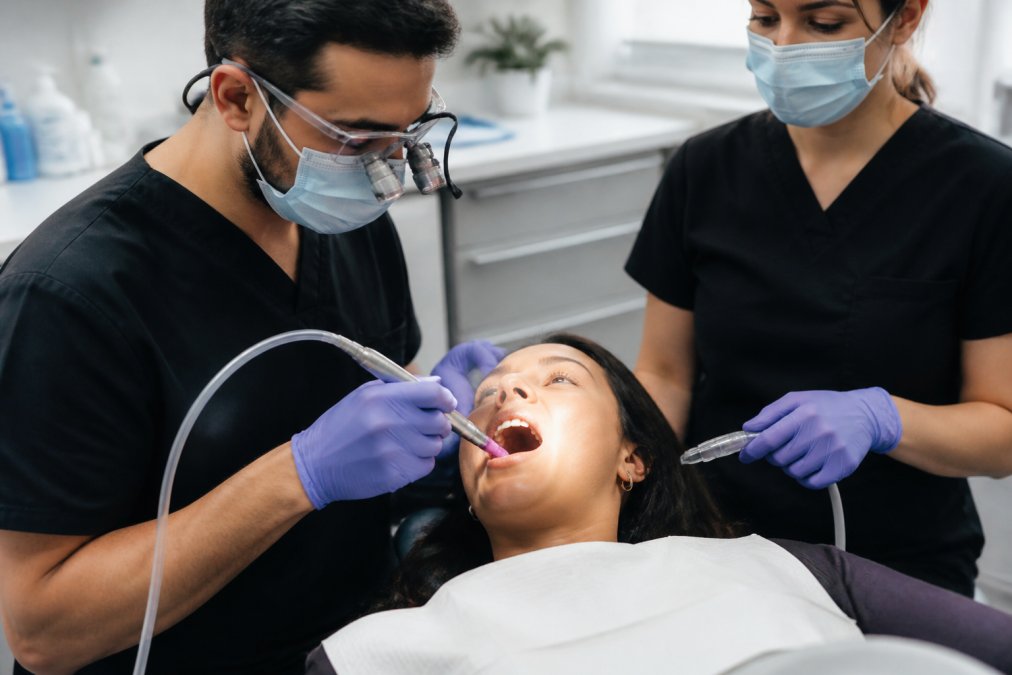
The wavelength matters more than most patients realize. Er:YAG lasers are well suited to hard and soft tissue and are often used for bone-related work, while Nd:YAG lasers target soft tissue and are valued for hemostasis and bacterial reduction. Asking which wavelength your dentist uses, and why, is a reasonable question.
Laser vs Traditional Gum Surgery: Which Approach Fits You?
Laser and traditional gum surgery differ mainly in invasiveness, recovery, and how much tissue is disturbed. Traditional surgery, often called flap surgery, lifts the gum away from the tooth to access deep pockets directly, then sutures it back. Laser therapy is minimally invasive and typically avoids sutures.
| Factor | Laser Therapy | Traditional Flap Surgery |
|---|---|---|
| Invasiveness | Minimally invasive | More invasive |
| Anesthesia | Local | Local, sometimes more |
| Sutures | Usually none | Common |
| Recovery | Often faster | Longer |
| Best for | Mild to moderate disease | Deep pockets, bone defects |
| Bone regeneration | Limited alone | Can combine with grafting |
Neither is universally better. Deep pockets with significant bone loss may still need traditional access or bone regeneration procedures. For shallow to moderate pockets, laser treatment often fits well.
Laser Periodontal Therapy Recovery Time and Pain Expectations
Most patients return to normal eating and speaking within a day or two after laser periodontal therapy, but the experience is not uniform. Here is a realistic timeline based on how soft tissue responds to laser energy.
Day of treatment. The area is numbed with local anesthesia, so you will not feel the laser itself. Once the anesthetic wears off, typically two to four hours later, expect a dull ache and tenderness at the gumline rather than sharp pain (mouthhealthy.org). Over-the-counter analgesics such as ibuprofen or acetaminophen are usually enough. Avoid chewing on the treated side, and skip very hot or very cold foods for the first 24 hours.
Days 1-3. Mild swelling and light bleeding when brushing are common. Sensitivity to temperature is the most frequently reported complaint. Most patients find that a soft-bristled brush, a gentle saltwater rinse, and sticking to soft, lukewarm foods keeps discomfort manageable. This is the window when the difference from traditional flap surgery is most obvious: because a laser seals small blood vessels and nerve endings as it cuts, there is typically less bleeding, less swelling, and no sutures to manage.
Days 4-7. Tenderness usually fades. You can generally resume normal brushing and most foods. If discomfort is severe, worsening, or lasts beyond a week, call your dentist, that can signal an infection or a pocket that needs re-evaluation.
Weeks 2-6. Gum tissue may look and feel normal, but this is when the periodontal ligament and bone are still stabilizing. This is the gap most guides miss: recovery is not the same as healing. Improvement is measured clinically at follow-up, not by how you feel on day three.
How laser discomfort compares to scaling and root planing. Traditional scaling and root planing is often done with local anesthesia and can leave gums sore for several days to a week, with more bleeding and swelling. Laser-assisted treatment tends to produce less bleeding and faster surface comfort, though the underlying periodontal condition still determines how much healing is needed. Neither approach is painless, and any clinician who promises otherwise is overselling.
Anesthesia specifics worth asking about. Ask whether the practice uses topical anesthetic before the injection, whether they offer nitrous oxide for anxious patients, and whether they will treat one quadrant or the full mouth per visit. Treating a quadrant at a time often means less total anesthetic and a gentler recovery, but it requires more appointments.
Keep a simple log of what you eat, when you take analgesics, and how your gums feel each day for the first week. Bring it to your follow-up, it helps your dentist distinguish normal healing from a problem that needs attention.
Cost, Insurance, and Financing for Laser Gum Treatment
Cost is the single biggest reason patients delay periodontal treatment, and most articles dodge the question entirely. Here is a concrete framework for understanding what you will pay and how to reduce it.
What drives the price. Laser gum treatment is priced per quadrant or per tooth, not as a flat fee. The main variables are:
- Number of teeth or quadrants treated, full-mouth treatment costs more than a single quadrant.
- Depth of pockets and extent of bone loss, deeper disease takes longer and may require bone grafting.
- Whether the laser is used alone or with scaling and root planing, combination therapy is more thorough but adds time.
- Geographic market, fees in major metropolitan areas run higher than in smaller markets.
- Practice technology and specialist vs. general dentist, a periodontist typically charges more than a general practice.
Because of these variables, any single national figure is misleading. Ask for a written treatment plan that itemizes each procedure, the number of visits, and what is included in follow-up care.
How dental insurance handles it. Most dental plans cover periodontal treatment when it is deemed medically necessary, usually at 50-80% of the allowed fee after your deductible, and often subject to an annual maximum (commonly $1,000-$2,000) (the American Dental Association). The catch is that many plans do not have a separate code for laser therapy, they reimburse based on the underlying procedure, such as scaling and root planing or periodontal maintenance. That means the laser itself may be bundled into the fee rather than reimbursed separately. Before treatment, ask your insurer:
- Is periodontal therapy a covered benefit, and at what percentage?
- Does the plan distinguish between laser and traditional surgery, or reimburse based on the procedure code?
- Is pre-authorization required, and how long does it take?
- How much of my annual maximum remains this year?
Financing and payment strategies. If your plan leaves a large balance, common options include:
- In-office payment plans, many practices split the balance over several months with no interest.
- Third-party dental financing, companies that offer monthly payment plans, sometimes with promotional no-interest periods for qualified applicants.
- Health savings or flexible spending accounts, periodontal treatment is generally an eligible expense, so pre-tax dollars can reduce your effective cost.
- Staging treatment, treating one quadrant at a time spreads the cost across insurance years and may keep you under your annual maximum.
- Second opinions, a written plan from a periodontist can be compared against your general dentist’s recommendation.
We provide a written estimate before treatment begins and will review your insurance benefits and financing options so there are no surprises. Bring your insurance card and any prior periodontal records to your consultation.
The most effective way to control cost is to treat earlier. Mild to moderate disease is cheaper to manage than advanced periodontitis that requires grafting or extractions, and insurance typically covers more of the cost when treatment is medically necessary rather than elective.
Who Is a Candidate, and What Are the Risks?
Good candidates for laser gum treatment are generally patients with mild to moderate periodontitis, pockets of moderate depth, and no uncontrolled health conditions that would complicate healing. Patients with severe bone loss or certain medical conditions may need a different approach, which is why a full periodontal assessment comes first.
Risks and side effects are real and worth stating plainly:
- Temporary sensitivity to hot and cold
- Mild swelling or discomfort during the first week
- Gum recession in some cases as inflamed tissue resolves
- Incomplete resolution if pockets are too deep for a laser alone
Laser treatment does not cure periodontal disease, and it does not replace daily brushing, flossing, or professional maintenance. Long-term prognosis depends heavily on what you do between visits.
The single biggest factor in your long-term periodontal health isn't which instrument your dentist uses. It's whether you keep up with maintenance visits and home care afterward.
Gum disease is a chronic condition, and choosing between laser and traditional treatment is only the first decision. The harder part is committing to the maintenance that keeps results stable. Midwest Center for Dentistry and Implants offers comprehensive periodontal care under one roof, led by Dr. Patel, with a team trained on advanced technology and a focus on listening to your concerns in a comfortable, relaxing environment. If you've been putting off treatment because of anxiety or cost worries, start with an evaluation and a clear plan. Call (630) 766-0115 to schedule your visit and take the first step toward healthier gums.
Frequently Asked Questions
Is laser treatment for gums worth it?
For many patients with mild to moderate periodontal disease, laser therapy can be worth it because it targets bacteria in periodontal pockets while leaving more healthy tissue intact than traditional surgery. It often involves less bleeding, less discomfort, and a shorter recovery. Whether it is right for you depends on pocket depth, bone loss, and overall oral health, so a periodontal evaluation is the best way to know.
What are the potential downsides of laser gum surgery?
Laser gum surgery is not right for every case. Deep pockets, significant bone loss, or advanced periodontitis may still need traditional surgical approaches. Some patients need multiple sessions, and insurance coverage for laser procedures can vary. Your dentist can explain whether laser therapy is appropriate for your specific periodontal condition.
How expensive is it to laser your gums?
The cost of laser gum treatment depends on the number of teeth treated, the severity of periodontal disease, and your geographic area. Many dental offices offer payment plans or work with insurance to reduce out-of-pocket costs. Because pricing varies, ask your dental office for a personalized estimate and check whether your insurance plan covers laser periodontal therapy before scheduling.
Does laser gum therapy hurt?
Most patients report less discomfort with laser gum therapy than with traditional gum surgery. Local anesthesia is typically used, and many people need only over-the-counter pain relief afterward. Some sensitivity or mild soreness for a few days is common. Your dentist can discuss pain management options and what to expect during your laser periodontal therapy recovery time.